 So, In case you were not aware, the Saturn V rocket is HUGE.
 That building behind it is about 6 stories tall.
The Space Flight Center is located on the Redstone Arsenal, an Army base that was established in 1941 and was mainly used as a chemical weapons production and storage facility. The MSFC is the lead center for NASA's work on the International Space Station design and assembly, responsible for payloads and crew training, the Space Shuttle propulsion systems and its external tank, and NASA computers and networks. Also at the center is the Huntsville Operations Support Center (HOSC). The HOSC supports ISS and Space Shuttle launch, payloads and experiments. The HOSC also monitors rocket launches from Cape Canaveral Air Force Station whenever a Marshall Center payload is on board.
Also, Space Camp is there. I was really jealous of kids who got to go to Space Camp when I was a kid, but I am not as bitter now, mostly because I found out that they didn't really go into space like in the movie. Stupid rich kids.
There was a huge building dedicated to the Space Program and especially the Apollo program, the Saturn V rocket and the Lunar landings. Below is Command Module Casper of the Apollo 16 mission, the second to last NASA flight to the Moon.

 Seeing a skyline of rockets makes one think they are in a 1950's Sci Fi comic
 Another Saturn V, laid out lengthwise and broken into its various stages

 Concept design for the new Orion crew capsule
 How about this. Regular viewers of the History and Military channel may recognize the concept design for the Future Warrior program that they talked about so much a few years ago. It was really just an airsoft outfit in black with a motorcycle helmet and a foam gun. Somebody got paid millions of dollars to talk about what they wanted to make, then they turned in this piece of crap and got a huge amount of Federal dollars. Then they cancel the program before it produces a viable product. They could pay me to do this job for much less, I bet. It is kinda cool though.
The Space Flight center had a great display of current and former rocket based weaponry of the US Armed Forces in their "Rocket Park".

The AN/TWQ Avenger is a specialized turret mounted on a Humvee chassis for use as air defense platform. Above you can see the Stinger Missile pods and .50 caliber machine gun on the back of a Avenger. The Avenger can be linked to the Forward Area Air Defense Command, Control, Communications and Intelligence (FAAD C3I) system, which permits external radar tracks and messages to be passed to the fire unit to alert and cue the gunner. The government deployed Avengers to the White House around the first anniversary of 9/11. They have also been modified for use in Iraq as convoy protecting gun trucks.
 This is the MIM-72 Chaparral, another air-defense platform, this time based on the M113 APC chassis and mounting four missiles based on the AIM-9D Sidewinder air -to-air missiles. The US forces have never used the Chaparral in combat, although it has been used by US Allies. It is now retired from use by the US Armed Forces.
Here we have the Hawk , designed as a medium range anti-air missile. It was in service for more than 40 years in the Army and apparently being phased out of Marine Corps inventories, but I would imagine that they are pretty much gone by now. The Hawk system, consisting of the launcher, missiles and a variety of different radars and control stations has been improved many times and the system was used to good effect in several conflicts. In 1973, Israeli forces launched 75 Hawk missiles and are credited with destroying between 12 and 24 aircraft. Kuwaiti Hawk batteries claimed 14 Iraqi planes shot down in Iraq's August 1990 invasion. Two of those kills have been confirmed, a MiG-23BN and a Su-22.

Going even further back, we have the Nike Hercules missile, a multi-role, two-stage solid propellant missile introduced into service in 1958. It was used in the high and medium altitude air defense role by the US and its NATO allies. It was also possible to use the Nike Hercules as a surface to surface missile. The Nike H was optimized for shooting down bombers and when it ballistic missile technology superseded the nuclear armed bomber, the Nike H became less useful. All the missile sites were deactivated in the CONUS by 1974, except for a few in Alaska and Florida. The Army continued to use truck mounted Nike Hercules systems as a front line air defense platform until the early 1980's when they began to be replaced by the Patriot Missile System. Most other NATO Nike units were disbanded with the fall of the Soviet Union.
 This is the M270 MLRS, the Multiple Launch Rocket system. It is one of the most powerful and long ranged conventional weapons in the US Army's inventory. It is a rocket artillery system and is capable of sending its 12 270mm rockets to a range of 42 miles in 60 seconds. One MLRS firing all 12 rockets can completely blanket one square kilometer with submunitions. As a result the M270 is sometimes referred to as the "Grid Square Removal Service" As standard metric maps are divided up into 1km grids. It also fires the ATACMS (Army Tactical Missile System) which is ballistic missile capable of reaching out to 186 miles, with the warhead going as high as 164,000 feet. The MLRS has been in use since 1983 and seen use in Iraq and Afghanistan. 1,300 M270 systems have been manufactured, along with more than 700,000 rockets. The missiles can carry a variety of payloads, many of them using smaller submunitions. This kind of attack is very devastating to airfields, marshaling areas and exposed troops. During the Gulf War, the Iraqi soldiers were said to refer to the M77 submuntions as "Steel Rain." The M270 is no longer in production, with the last units produced in 2003 sold to the Egyptian Army. MLRS has been somewhat superseded in US service by the HIMARS, a lighter, C-130 transportable, wheeled version that only mounts one "six pack" of missiles
 Of course, it is interesting to remember the source of space flight and the space programs that it came from. It was all started by Werner Von Braun and the German rocket scientists who used rocketry to kill thousands of civilians at the behest of Adolf Hitler. In the closing days of WWII, the Allies competed for the German prototypes, plans and especially scientists. Above you can see a V1 Buzzbomb, the first cruise missile. In total, the V-1 attacks caused 22,892 casualties (almost entirely civilians). One could try to be optimistic and think that the Teflon, Tang and satellite navigation that we have gotten from the space program has made up for the deaths, but, since we still have thousands of ICBMs, I think the jury may still be out. That said, I believe that the space program is one of the most amazing things America has ever done and it is of the utmost importance that we continue to move forward with space exploration.
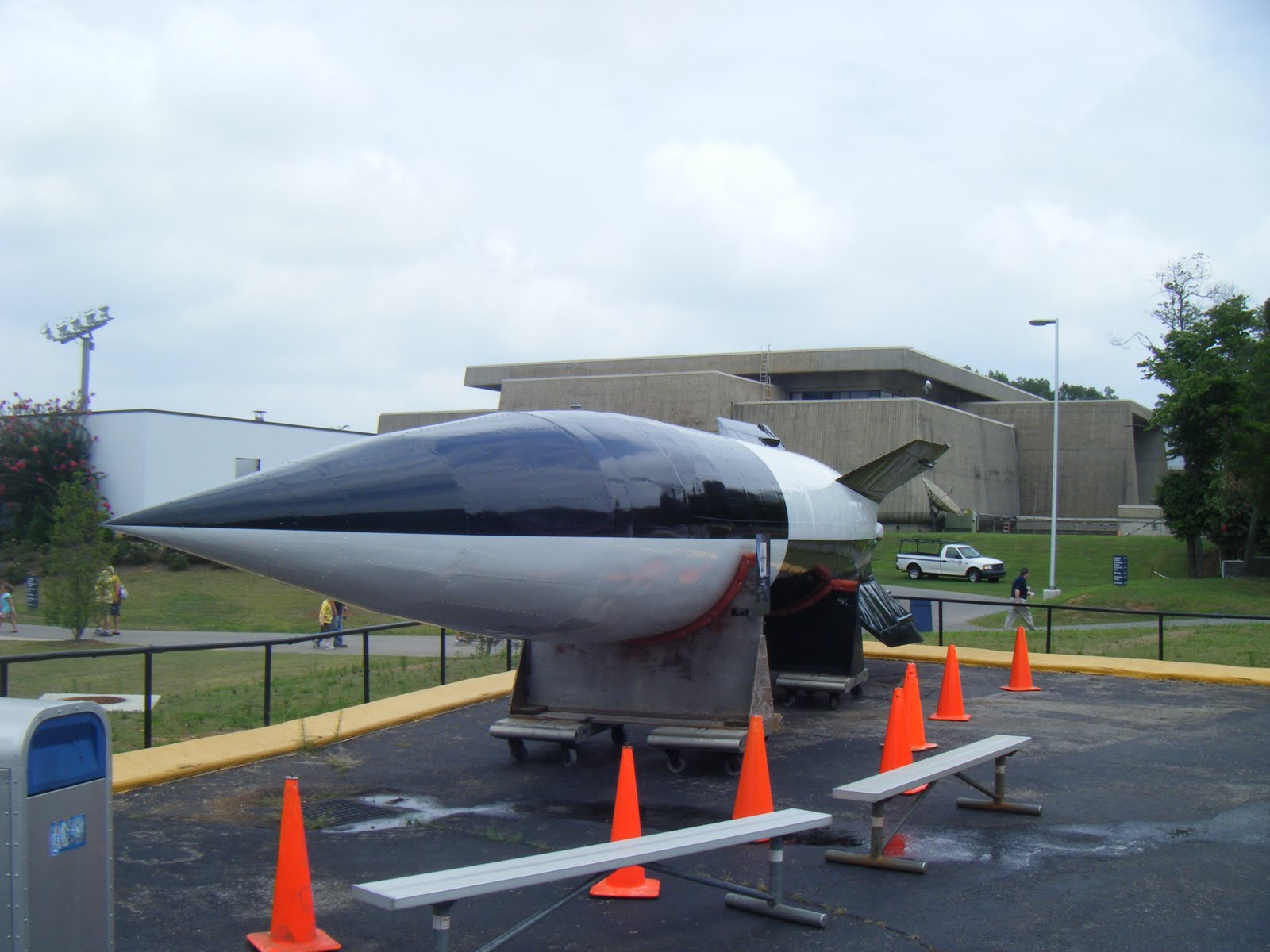 German V2/A4 rocket, the first man made object to reach sub orbital space.
It was the foundation of both US and Soviet space programs
 Original plans for the V2, detail photo below
 Captured by the US Army's 76th Infantry Division


 Germans


.jpg)


